
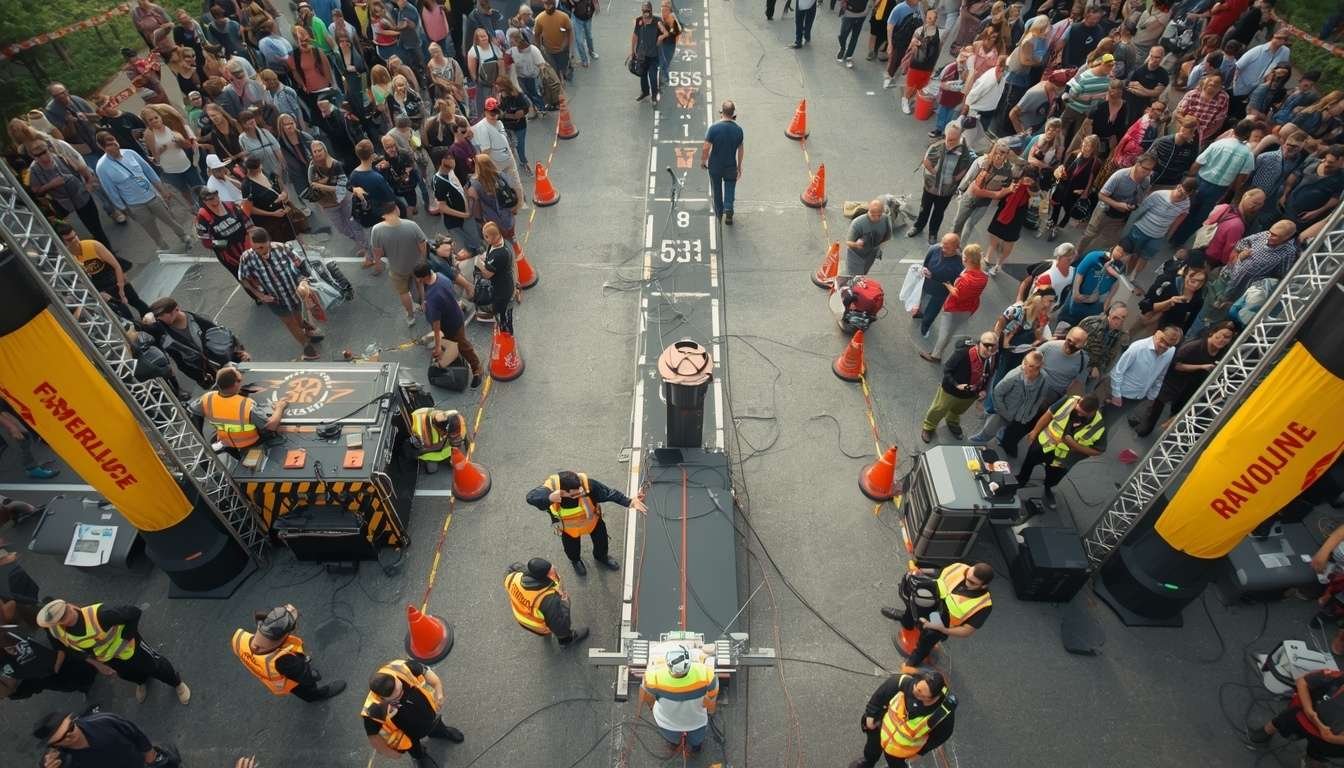
Festival crowd safety and staff coordination manual tasks 2026 require more than hiring security personnel and placing barriers around a venue. Organizers need a structured system for managing people, assigning responsibilities, monitoring crowd movement and responding to emergencies.
A festival can have several operational areas running simultaneously. These may include entrance gates, parking areas, food vendors, performance stages, pedestrian walkways and medical stations. Without proper coordination, a problem in one area can quickly affect other parts of the event.
A practical crowd safety manual gives every team member clear instructions about what to check, who to contact and what action to take when conditions change.
For US festival organizers, the plan should also account for local fire codes, emergency management requirements, venue restrictions and applicable workplace safety rules.
1. Establish a Clear Festival Safety Command Structure
Every festival needs a defined management structure before staff begin their assignments. Team members should know who supervises them and which person has authority to make operational decisions.
Without this structure, multiple teams may respond to the same situation differently or assume another department is handling it.
Assign Responsibilities to Each Team
A practical festival management structure can include the following positions.
| Position | Main responsibility |
|---|---|
| Event Safety Director | Oversees the overall safety operation |
| Operations Manager | Coordinates departments and daily activities |
| Crowd Manager | Monitors crowd movement and density |
| Security Supervisor | Directs security personnel and access control |
| Medical Coordinator | Coordinates first aid and emergency medical response |
| Communications Officer | Manages operational updates and incident reports |
| Zone Supervisor | Monitors assigned festival areas |
| Volunteer Coordinator | Assigns volunteers and manages their activities |
The size of the management team should reflect the event’s attendance, layout, duration and risk level.
A smaller community festival may operate with a combined management structure. A large music festival with multiple stages and entrances will usually need separate supervisors for individual areas.
Create a Staff Reporting Chain
Every worker should understand the reporting process.
For example:
- Security personnel report concerns to their zone supervisor.
- Zone supervisors communicate significant problems to the operations manager.
- The operations manager coordinates with the event safety director.
- Medical teams communicate directly with their medical coordinator.
- Emergency services receive information through the designated emergency liaison.
This structure should not prevent anyone from calling 911 when immediate emergency assistance is needed.
2. Complete Pre-Event Crowd Safety Inspections
Before opening the gates, the safety team should inspect the entire festival site.
A site inspection helps identify problems that may become dangerous once thousands of visitors begin moving through the venue.
The inspection should cover public areas, restricted spaces, temporary structures and emergency access routes.
Inspect Entrances and Exit Routes
Entrance and exit areas require particular attention because people often gather in large numbers around these locations.
Staff should check:
- All designated exits are unlocked and unobstructed.
- Entrance queues have sufficient space.
- Pedestrian routes are free from equipment and temporary obstructions.
- Emergency exits have visible signs.
- Accessible routes are available.
- Security screening does not create dangerous bottlenecks.
- Emergency vehicle access remains clear.
Organizers should also establish a safe procedure for redirecting visitors when an entrance becomes congested.
Check Stage Areas and Crowd Barriers
Performance areas can experience sudden changes in crowd movement when a popular artist appears or an event reaches an important moment.
Inspect the following:
- Stage-front barriers and their approved installation.
- Emergency access behind performance areas.
- Clear routes between audience sections.
- Safe separation between public and restricted areas.
- Potential crowd pressure points.
- Equipment placement around pedestrian walkways.
Barriers should be selected and installed according to the venue design and expected crowd behavior. Improvised barriers can create additional hazards.
Inspect Temporary Facilities
Festivals often use temporary structures that introduce additional safety considerations.
Check:
- Tents and temporary stages.
- Electrical cables and generators.
- Food preparation areas.
- Lighting equipment.
- Temporary fencing.
- Portable restrooms.
- Fire extinguishers and fire access routes.
Any serious hazard should be corrected before the affected area opens to visitors.
3. Assign Manual Tasks to Festival Staff
A written task assignment system makes daily operations easier to supervise. Instead of giving general instructions such as watching the crowd, organizers should explain exactly what each team needs to monitor.
The following manual tasks can form part of a festival operations checklist.
Entrance and Ticketing Staff
Entrance teams manage visitor arrivals and help prevent congestion near admission points.
Their tasks include:
- Checking tickets and approved entry credentials.
- Directing visitors toward available entrance lanes.
- Keeping emergency access routes clear.
- Reporting unusually long queues.
- Identifying damaged or unstable barriers.
- Directing visitors away from closed areas.
- Requesting additional support when crowd pressure increases.
Ticketing personnel should not attempt to physically control dangerous crowd surges. Their responsibility is to communicate the problem and follow the approved response procedure.
Crowd Monitoring Staff
Crowd monitors observe visitor movement throughout the venue.
Their regular tasks include:
- Watching for unusual crowd compression.
- Monitoring movement near stages.
- Identifying blocked pedestrian routes.
- Checking areas where opposing visitor flows meet.
- Reporting aggressive behavior or physical confrontations.
- Observing people who may need medical assistance.
- Reporting damaged barriers and unsafe conditions.
Staff should report observable changes rather than relying on assumptions about whether an area is safe.
Security Personnel
Security staff support access control and respond to security-related incidents.
Their assignments may include:
- Monitoring restricted entrances.
- Checking authorized access to backstage areas.
- Supporting crowd managers.
- Reporting suspicious activity.
- Responding to conflicts according to training.
- Protecting emergency access routes.
- Assisting with controlled evacuations when directed.
Security personnel should understand the limits of their authority and coordinate with law enforcement when an incident requires police involvement.
Volunteer Teams
Volunteers often support visitor information, directions and general event assistance.
Their tasks may include:
- Providing directions to festival facilities.
- Identifying accessible routes.
- Helping visitors locate information stations.
- Reporting lost children or missing persons.
- Directing people toward medical assistance.
- Reporting hazards to their assigned supervisors.
Volunteers should never be assigned responsibilities that require specialist security, medical or emergency response training without the necessary qualifications.
4. Coordinate Staff Communication Across Festival Zones
Communication problems can delay responses even when enough staff members are available.
A reliable communication system allows supervisors to share information and coordinate actions across different festival areas.
Establish a Central Operations Point
The festival should have a designated control point where authorized supervisors can coordinate operational information.
Depending on the event, this may be a control room, operations cabin or secured management tent.
The control point should have access to:
- Festival site maps.
- Staff deployment information.
- Emergency contact numbers.
- Radio communication equipment.
- Incident reporting records.
- Medical station locations.
- Emergency access information.
- Updated operational procedures.
For larger events, the control point should maintain communication with security, medical, fire safety and other relevant operational teams.
Use Standard Radio Communication Procedures
Radio messages should be short, clear and easy to understand.
Staff should communicate four essential details:
- Their location.
- The nature of the problem.
- The assistance required.
- Whether the situation is becoming more serious.
For example:
“North entrance. Queue congestion near the screening area. Additional crowd staff required. Emergency access remains clear.”
Organizers should establish approved radio channels and identify which channel is used for emergency communication.
Staff should also have backup communication methods in case radios lose power or the main communication system fails.
Introduce Shift Handover Procedures
Long festival operating hours require staff rotations.
A proper handover prevents important information from disappearing when one team leaves and another takes over.
Each outgoing supervisor should report:
- Current crowd conditions.
- Unresolved incidents.
- Equipment problems.
- Areas requiring additional monitoring.
- Staff absences.
- Changes to access arrangements.
- Any instructions received from event management.
The incoming supervisor should acknowledge the information before accepting responsibility for the area.
5. Monitor Crowd Density and Movement During Performances
Crowd conditions can change quickly during live performances.
A stage area that appears manageable before a headline performance may experience significant crowd movement when the audience moves toward the front.
Organizers should monitor more than total attendance. They also need to understand where visitors are gathering and how people are moving between areas.
Identify High-Risk Crowd Locations
Common locations requiring additional attention include:
- Main stage viewing areas.
- Entrance and ticket inspection lanes.
- Narrow pedestrian walkways.
- Food and beverage concessions.
- Restroom access routes.
- Merchandise areas.
- Intersections between different pedestrian routes.
- Transportation and parking exits.
These areas should have clearly assigned monitoring responsibilities.
Recognize Early Warning Signs
Staff should be trained to identify conditions that may indicate increasing crowd pressure.
| Warning sign | Appropriate staff response |
|---|---|
| Increasing queue length | Monitor entry flow and request additional staff |
| People struggling to move | Report immediately and initiate the approved response |
| Persistent pushing | Alert the crowd manager and security supervisor |
| Blocked pedestrian routes | Arrange safe removal of obstructions |
| Damaged barriers | Restrict access and notify the responsible supervisor |
| Visitors showing distress | Request medical assistance |
| Sudden movement toward one area | Assess the cause and activate crowd management procedures |
Crowd density should be assessed using the venue’s approved capacity and crowd management plan. A simple headcount does not always reveal dangerous crowd pressure.
Control Movement Between Performance Areas
When several stages operate at the same time, visitors may move between performances in large groups.
Organizers can reduce unnecessary congestion by:
- Providing clearly marked pedestrian routes.
- Keeping walkways free from vendor equipment.
- Positioning staff at important intersections.
- Separating pedestrian and vehicle movements.
- Using suitable barriers to guide visitor movement.
- Providing information about alternative routes.
Staff should never direct visitors into an area without confirming that the route is safe and has sufficient capacity.
6. Prepare Emergency Response Procedures for Festival Staff
Every festival needs written emergency procedures that staff can follow without having to make up instructions during an incident.
The procedures should cover both immediate actions and the coordination of emergency services.
Medical Emergencies
Medical incidents can occur anywhere within a festival venue.
Staff should know:
- The location of the nearest medical station.
- How to contact the medical response team.
- Which information to provide when requesting assistance.
- How to keep the immediate area accessible.
- Where emergency medical vehicles can enter.
- Who coordinates communication with external EMS providers.
Staff without medical training should not attempt procedures beyond their qualifications.
Fire and Electrical Emergencies
Fire hazards can develop around generators, temporary electrical installations, cooking equipment and performance structures.
The response plan should include:
- Raising the alarm.
- Contacting emergency services.
- Notifying the event safety team.
- Keeping visitors away from the affected area.
- Protecting emergency access routes.
- Following evacuation instructions.
Only trained and authorized personnel should use fire extinguishers when it is safe to do so.
Severe Weather
Outdoor festivals need weather monitoring and a clear decision-making process.
Potential hazards include:
- Lightning.
- High winds.
- Heavy rainfall.
- Flash flooding.
- Extreme heat.
- Falling branches or unstable temporary structures.
The event safety director should coordinate with relevant weather information providers and venue authorities.
The plan should specify who can pause performances, close affected areas or order an evacuation.
Moving visitors into tents or temporary structures is not automatically a safe response to severe weather. Shelter arrangements must match the actual hazard.
Missing Children and Vulnerable Visitors
Large festivals can make it difficult for visitors to locate family members or companions.
Staff should follow an established missing-person procedure.
This should include:
- Receiving the report at a designated information point.
- Recording relevant identifying details securely.
- Notifying the appropriate supervisor.
- Contacting security when required.
- Following the approved reunification procedure.
- Recording the outcome.
Personal information should only be shared with authorized personnel who need it to manage the incident.
Festival Evacuation
An evacuation requires coordination between management, crowd managers, security and emergency services.
The written plan should identify:
- Who has authority to initiate an evacuation.
- How staff receive evacuation instructions.
- Which public announcement system will be used.
- Designated evacuation routes.
- Accessible evacuation arrangements.
- Safe assembly areas.
- Emergency vehicle access.
- Procedures for accounting for staff.
Evacuation routes should be suitable for the expected movement of visitors. Staff should never assume that everyone knows the venue layout.
7. Use a Daily Festival Staff Coordination Checklist
A daily checklist gives supervisors a practical way to verify that important tasks are completed.
It should be used before opening, during operations and at closing.
Before Festival Opening
- Confirm all assigned staff have reported for duty.
- Verify supervisor contact details.
- Inspect entrances and exits.
- Check emergency vehicle access.
- Inspect crowd barriers.
- Confirm medical stations are operational.
- Test radios and backup communication equipment.
- Review weather conditions.
- Confirm evacuation routes are clear.
- Brief staff on emergency procedures.
During Festival Operations
- Monitor entrance queues.
- Observe stage crowd conditions.
- Check pedestrian walkways.
- Monitor restricted access points.
- Maintain communication between supervisors.
- Record incidents and corrective actions.
- Check staff coverage in assigned zones.
- Report damaged equipment.
- Monitor weather-related risks.
- Keep emergency routes accessible.
At Closing Time
- Coordinate visitor departure.
- Monitor parking and transportation areas.
- Keep emergency access routes clear.
- Confirm staff have completed their assignments.
- Record unresolved safety concerns.
- Collect incident reports.
- Check temporary facilities.
- Report equipment damage.
- Confirm the site is safe for overnight operations or breakdown work.
The checklist should be adapted to the actual festival layout and operating schedule. It does not replace a formal risk assessment or emergency action plan.
8. Determine the Right Staff Numbers and Deployment Strategy
Staffing decisions should be based on the risks and operational requirements of the festival rather than attendance alone.
Two events with the same number of visitors may require different staffing arrangements because of their layouts, performance schedules, crowd profiles and access conditions.
Understand Crowd Manager Requirements
Applicable fire codes may establish minimum crowd manager staffing requirements.
For example, Seattle’s fire safety requirements specify trained crowd managers at a ratio of one for every 250 people for applicable gatherings exceeding 1,000 people.
This is a local requirement and should not be treated as a universal staffing ratio for every US festival.
Organizers should confirm requirements with their local authority having jurisdiction and the venue’s fire safety officials.
Allocate Staff According to Operational Risk
A useful deployment approach considers the following factors.
| Festival area | Main staffing consideration |
|---|---|
| Main entrance | Expected arrival volume and screening requirements |
| Main stage | Crowd pressure and performance schedule |
| Secondary stages | Audience movement and access routes |
| Food areas | Queue congestion and pedestrian circulation |
| Parking | Vehicle and pedestrian separation |
| Medical stations | Visitor access and emergency response needs |
| Backstage | Restricted access and authorized personnel |
| Festival exits | Departure flow and transportation access |
Account for Breaks and Staff Absences
A staffing plan should include backup personnel.
Without relief arrangements, a zone may become temporarily unmonitored when workers take breaks or leave unexpectedly.
Supervisors should maintain an updated staff deployment list and confirm that replacement personnel understand their assigned duties.
9. Record Incidents and Review Safety Performance
Incident records help organizers identify recurring problems and improve future festival operations.
A consistent reporting process also helps management understand whether existing safety arrangements are working.
What Should an Incident Report Include?
A useful incident report should record:
- Date and time.
- Exact festival location.
- Type of incident.
- People or teams involved.
- Description of what happened.
- Immediate actions taken.
- Emergency services contacted.
- Follow-up actions required.
- Name of the reporting staff member.
Records should be factual and avoid unsupported assumptions.
Sensitive visitor information should be handled according to applicable privacy and recordkeeping requirements.
Conduct a Post-Event Safety Review
After the festival, management should review operational performance with relevant supervisors and external agencies where appropriate.
Important review questions include:
- Which areas experienced repeated congestion?
- Were emergency routes accessible throughout the event?
- Did radio communication work reliably?
- Were staff responsibilities clearly understood?
- Were medical response teams able to reach incidents?
- Did shift handovers include important information?
- Were any safety procedures difficult to follow?
- Which improvements should be completed before the next festival?
The review should produce specific corrective actions with assigned responsibilities rather than a general list of observations.
Choosing the Right Festival Safety and Coordination System
A festival organizer must decide how much supervision, security coverage and communication infrastructure an event actually needs.
The best arrangement depends on the event’s operational complexity and the consequences of a safety failure.
When Is a Basic Manual Sufficient?
A basic written manual may work for a smaller community festival with:
- A clearly defined venue.
- Limited entrances.
- One main performance area.
- A manageable visitor capacity.
- Simple pedestrian routes.
- An established emergency response arrangement.
Even smaller festivals need designated supervisors, emergency procedures and trained personnel for safety-critical responsibilities.
When Is a Dedicated Operations Team Necessary?
A larger or more complex festival may need a dedicated operations structure when it has:
- Multiple performance stages.
- Several entrance and exit points.
- Large audience movements between areas.
- Temporary structures and extensive vendor areas.
- Long operating hours.
- Significant transportation requirements.
- Multiple security and medical teams.
In these situations, relying on one general supervisor can create communication delays and unclear responsibilities.
Manual Coordination vs Digital Management
Both methods can support festival operations, but they serve different needs.
| Factor | Manual coordination | Digital management |
|---|---|---|
| Staff assignments | Printed deployment sheets | Centralized staff schedules |
| Incident records | Paper forms | Digital incident reporting |
| Communication | Radios and briefings | Radios with supporting digital systems |
| Site information | Printed venue maps | Shared digital site maps |
| Updates | Supervisor announcements | Centralized operational updates |
| Backup requirements | Spare printed documents | Backup power and offline access |
Digital systems can improve information sharing, but they should not become the only way staff receive emergency instructions.
What Should Organizers Prioritize?
A practical decision framework is:
- Small and simple event: Prioritize clear written instructions, trained supervisors, reliable radios and basic emergency procedures.
- Medium-sized festival: Add dedicated zone supervisors, formal shift handovers, documented inspections and structured incident reporting.
- Large or complex festival: Establish a dedicated operations center, coordinated emergency planning, specialist safety personnel and reliable backup communication systems.
The most important consideration is whether the chosen system allows staff to recognize a problem, report it and receive clear instructions without unnecessary delays.
A sophisticated digital platform cannot compensate for unclear responsibilities or insufficiently trained staff.
Frequently Asked Questions
1. What should a festival crowd safety manual include?
A festival crowd safety manual should include staff responsibilities, crowd monitoring procedures, entrance and exit management, emergency communication, medical response, evacuation arrangements and incident reporting procedures.
It should also contain venue maps, emergency contacts and daily inspection checklists.
2. What are the main festival crowd safety and staff coordination manual tasks 2026?
The main tasks include pre-event inspections, staff deployment, crowd monitoring, radio communication, emergency preparedness, shift handovers and incident documentation.
Each task should have an assigned responsible person and a clear reporting procedure.
3. How many crowd managers are required for a festival?
The required number depends on applicable fire codes, venue capacity and event conditions.
Some jurisdictions use a ratio of one trained crowd manager per 250 occupants for applicable gatherings. However, organizers must verify the actual requirements with local fire officials.
4. What should festival staff do when crowd congestion increases?
Staff should immediately report the developing problem to their supervisor or crowd manager.
The responsible team should assess the conditions, follow the approved crowd management procedures and request additional assistance when necessary.
Staff should not create new pedestrian routes or redirect visitors into unverified areas.
5. How should festival organizers coordinate security and medical teams?
Organizers should establish clear reporting channels and define each team’s responsibilities before the event.
Security teams should know how to request medical assistance, while medical coordinators should have reliable communication with the operations center.
Both teams should understand their roles during evacuations and other major incidents.
6. What communication equipment do festival supervisors need?
Depending on the event, supervisors may need two-way radios, spare batteries, backup phones, emergency contact lists and access to the central operations point.
Larger festivals may also require backup power and alternative public announcement arrangements.
7. How often should festival staff receive safety briefings?
Staff should receive an initial briefing before starting their assignments.
Additional briefings may be necessary when shifts change, weather conditions deteriorate, event layouts change or new operational risks emerge.
8. Why are staff handover records important at festivals?
Handover records help incoming teams identify unresolved incidents, equipment problems, staffing shortages and areas requiring additional attention.
Without proper handovers, important safety information may be lost between shifts.
9. What should organizers check before allowing visitors into a festival?
Organizers should verify that entrances and exits are ready, pedestrian routes are clear, emergency access is available, medical arrangements are operational and designated staff are in position.
The opening inspection should be documented by the responsible supervisors.