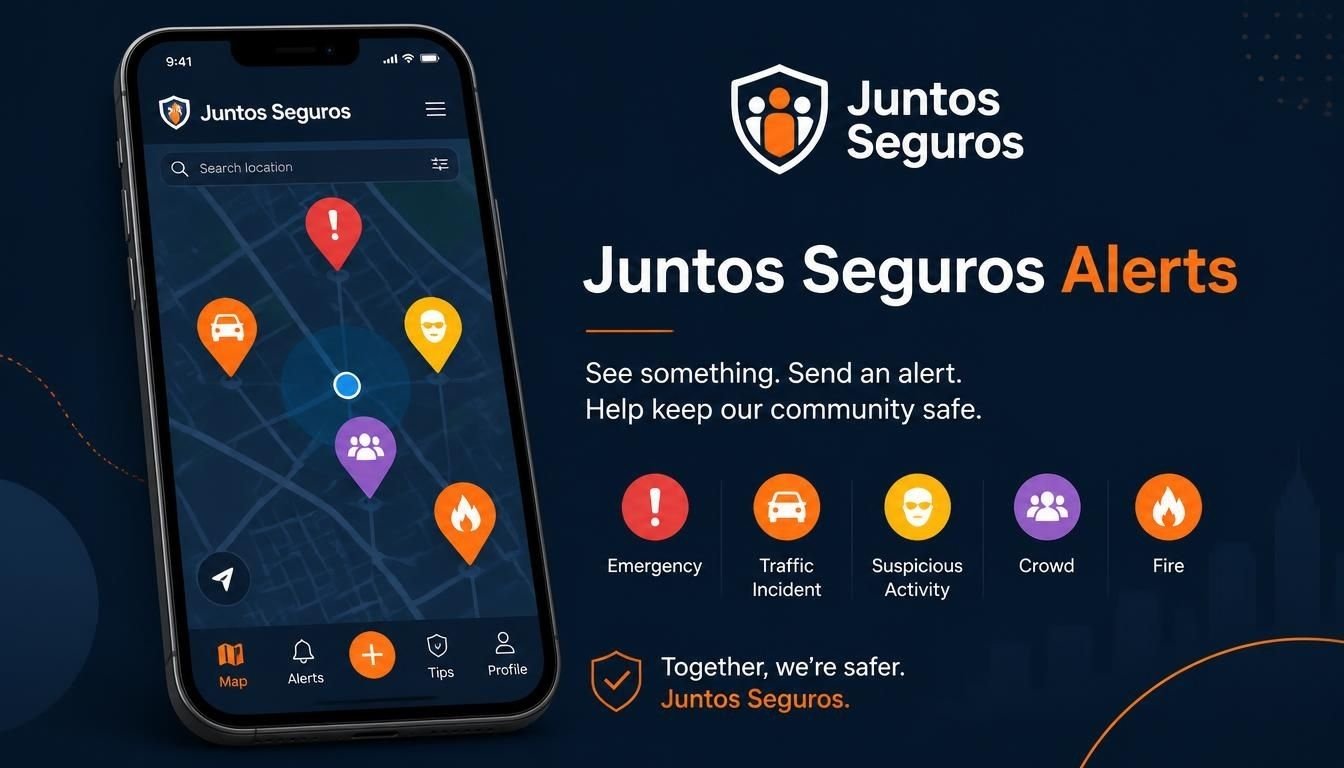
Juntos Seguros Alerts are location based community updates that help users understand reported activity in a specific area. Alerts can provide information about where a report was made when it was submitted and what was observed.
The platform organizes community information through location based notifications and an interactive map. Its goal is to make relevant updates easier to find and understand.
What Is a Juntos Seguros Alert?
A Juntos Seguros alert is an update connected to a specific location or community report.
Depending on the report the alert may include
- Location
- Time of submission
- Description of the activity
- Additional notes
- Current status when available
The amount of information can vary between reports because community members provide different levels of detail.
What Do Different Alert Types Mean?
The meaning of an alert depends on the category shown on the map.
The current Juntos Seguros community safety map describes several types of map markers including Active Alert Safe Zone Cleared or Recent Checkpoint Workplace Raid and Neighborhood Presence.
Active Alert
An Active Alert indicates reported activity that is considered ongoing in the marked area.
This type of alert is intended to draw attention to a current report. Users should still check the details and time of the report because situations can change.
Safe Zone
A Safe Zone represents an area where no reported activity has been identified according to the platform information.
A Safe Zone should not be interpreted as a permanent guarantee that an area is completely safe. Conditions can change and new reports may appear.
Cleared or Recent
A Cleared or Recent marker refers to activity that was reported recently but is no longer considered active.
Keeping recent information visible can help users understand what happened in an area even after the situation has changed.
Checkpoint
A Checkpoint alert identifies a reported immigration checkpoint at a particular road or location.
Users can select the marker to review the available details and understand when the report was submitted.
Workplace Raid
A Workplace Raid marker identifies reported enforcement activity connected to a workplace.
The information should be reviewed carefully because the situation may change after the original report was submitted.
Neighborhood Presence
A Neighborhood Presence alert refers to a report involving agents or vehicles in a residential area.
The alert provides location based context so users can understand where the report originated.
How to Read an Alert
When an alert appears on the map do not rely only on the marker itself.
Select the alert and review the available information. Pay attention to the location and time first.
Then read the description and any additional notes. This gives you more context about what the report actually says.
A useful habit is to check whether a newer update has appeared before making an important decision.
Why Does the Time of an Alert Matter?
The time attached to an alert is important because community situations can change quickly.
An alert from several hours ago may not describe what is happening at the same location right now.
For this reason users should look at the most recent available information instead of assuming an older alert is still active.
The platform explains that community reports can include the time they were submitted along with the location and description.
What Does a Location Marker Tell You?
A location marker shows where the community report was associated with the map.
It gives users a visual way to understand where information was reported instead of searching through separate messages or posts.
However a marker should not be treated as proof that every nearby location has the same situation.
The report relates to the information submitted for that particular location.
Are Juntos Seguros Alerts Official Government Alerts?
No.
Juntos Seguros describes its information as community based. The platform states that its updates should complement rather than replace official government announcements or emergency services.
This distinction is important when dealing with serious situations.
If an emergency requires immediate assistance users should contact the appropriate emergency service instead of relying only on an online community alert.
How Reliable Are the Alerts?
Juntos Seguros says submitted information is reviewed for factors such as accuracy duplication location relevance and supporting details before being shared more widely.
At the same time community information should still be read carefully.
Users should check the report time and details and look for newer information when available.
No online alert should be treated as a reason to enter a dangerous situation or confront anyone.
What Should You Do After Receiving an Alert?
The best response depends on the type of information and the situation around you.
A simple approach is
- Open the alert
- Check the location
- Check when it was submitted
- Read the full description
- Look for newer updates
- Compare important information with official sources
- Follow official safety instructions when applicable
This keeps the alert in its proper role as an information source rather than a replacement for emergency services.
Can Alerts Help With Daily Planning?
Yes.
Location based alerts can help users stay aware of information that may affect their normal routines such as travel work school or family activities.
Juntos Seguros says its location based notifications are intended to help users focus on nearby information that may be relevant to their daily routines.
The goal is not to create fear but to provide useful context for everyday decisions.
How Are Alerts Connected to the Safety Map?
The alerts and map work together.
The map organizes community reports by location while alerts can bring attention to information that may be relevant to areas users follow.
This makes it easier to understand both what was reported and where it was reported.
The platform describes its interactive map as a way to view location based community information in a simple visual format.
What Should You Avoid When Reading an Alert?
Avoid making assumptions that are not included in the report.
You should also avoid sharing unverified claims as confirmed information.
Do not use an alert as a reason to approach an incident or place yourself in danger.
Instead use the information to stay aware and then rely on official sources when a situation requires authoritative instructions.
Final Takeaway
Juntos Seguros Alerts are location based community updates that help users understand reported activity in specific areas.
Different markers can represent active alerts safe zones recent activity checkpoints workplace activity or neighborhood presence. The exact details depend on the report and its current status.
The most useful way to read an alert is to check its location time description and latest available status.
Community alerts can improve awareness but they should not replace official emergency information or government announcements.
FAQs
What do Juntos Seguros Alerts mean?
Juntos Seguros Alerts indicate location based community reports that provide information about activity reported in a specific area.
What does an Active Alert mean on Juntos Seguros?
An Active Alert indicates reported activity that is considered ongoing in the marked area. Users should check the report details and time for context.
Does a Safe Zone mean the area is completely safe?
No. A Safe Zone indicates that no reported activity has been identified according to the available platform information. Conditions can change at any time.
Can I trust the time shown on an alert?
The time helps show when the report was submitted. It is important because conditions can change and an older report may no longer describe the current situation.
Are Juntos Seguros Alerts official government notifications?
No. They are community based updates and should complement rather than replace official government announcements or emergency services.
What should I do when I receive an alert?
Check the location time and description first. Look for newer information and follow official instructions if the situation requires emergency or government assistance.