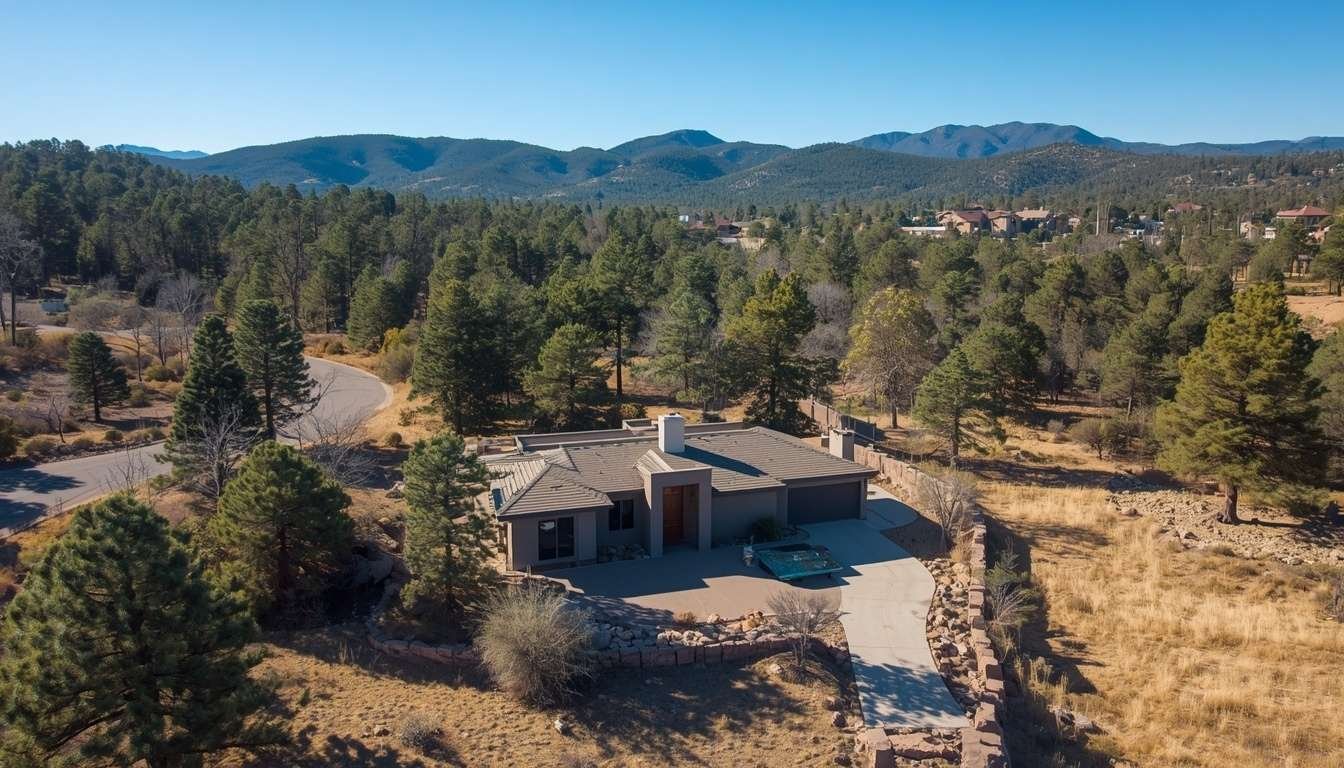
Owning a home near Tonto National Forest offers access to beautiful mountain scenery, wooded surroundings and outdoor recreation. However, wildfire exposure can create insurance challenges for property owners in Payson, Arizona.
Finding Payson AZ Tonto National Forest fire zone property insurance requires more than comparing annual premiums. Insurance companies may evaluate vegetation, distance from forest boundaries, roof materials, property access, nearby fire services and the availability of water for firefighting.
Some homeowners can obtain standard homeowners insurance with additional wildfire-related requirements. Others may need specialty coverage because traditional insurers consider their properties too risky.
Understanding these factors before purchasing a home or renewing an existing policy can help prevent unexpected coverage problems.
Key Insights
- Homes near Tonto National Forest may face higher insurance costs because of wildfire exposure and limited fire protection access.
- Insurance companies evaluate individual properties rather than relying only on the Payson ZIP code.
- Standard homeowners policies generally cover fire and smoke damage, but exclusions and policy conditions matter.
- Defensible space and fire-resistant home improvements may improve insurance eligibility.
- Buyers should confirm insurance availability and replacement-cost coverage before closing on a forest-adjacent property.
Why Wildfire Risk Matters for Properties Near Tonto National Forest
Payson is part of Arizona’s Rim Country. Its forested surroundings and proximity to Tonto National Forest create conditions that insurers consider when evaluating residential properties.
The main concern is the wildland-urban interface (WUI). This describes areas where homes and other structures meet or sit within natural vegetation.
Factors That Affect Insurance Eligibility
Insurance companies may evaluate several property-specific conditions.
- Distance from forest vegetation: Homes surrounded by dense trees and brush may have greater wildfire exposure.
- Roof construction: Wood shingles and older roofing materials can increase concerns about fire resistance.
- Exterior materials: Combustible siding, exposed wood decks and attached structures can affect risk assessments.
- Property slope: Steep terrain and nearby vegetation can influence how quickly fire spreads toward a home.
- Road access: Narrow roads, steep driveways and limited turnaround areas may complicate emergency response.
- Water availability: Properties without reliable water access or nearby fire protection infrastructure may face additional underwriting challenges.
- Fire department protection: Distance from fire stations and the community’s firefighting resources can influence insurance decisions.
These factors explain why two homes in Payson can receive different insurance offers even when they are located within the same ZIP code.
Does Living Near the National Forest Automatically Make a Home Uninsurable?
No. Proximity to Tonto National Forest does not automatically disqualify a property from homeowners insurance.
Insurers use different underwriting standards and wildfire risk models. Some may accept homes with appropriate construction and vegetation management, while others may decline properties with higher exposure.
The location of the home is only one part of the assessment. Its construction, surroundings, access and available fire protection also matter.
What Does Wildfire Property Insurance Cover in Payson?
A standard homeowners insurance policy generally includes fire coverage. However, the exact protection depends on the policy language, coverage limits, exclusions and conditions.
Homeowners should examine the following coverage areas before purchasing a policy.
Dwelling Coverage
Dwelling coverage protects the main residential structure against covered damage.
For wildfire-exposed homes, the most important question is whether the policy provides enough money to rebuild the property after a total loss.
Review coverage for:
- Main house reconstruction
- Attached garages
- Roofing and structural materials
- Permanently installed fixtures
- Covered structural improvements
A policy based on actual cash value may deduct depreciation from the settlement. Replacement-cost coverage generally pays the eligible cost of repairing or rebuilding without that depreciation deduction, subject to policy terms and limits.
Other Structures Coverage
Detached structures may require separate attention.
Examples include:
- Detached garages
- Storage buildings
- Workshops
- Fences
- Guest houses
- Detached covered patios
Check whether the policy includes sufficient coverage for these structures. Some properties near the forest have multiple buildings that would be expensive to replace.
Personal Property Coverage
Wildfire damage can destroy furniture, clothing, electronics, appliances and other personal belongings.
Personal property coverage helps replace eligible possessions after a covered loss.
Homeowners should check:
- Whether belongings are covered at replacement cost or actual cash value
- Special limits for jewelry and valuable collections
- Coverage for belongings stored in detached buildings
- Documentation requirements for expensive possessions
Maintaining a home inventory with photographs, receipts and serial numbers can make a future claim easier to document.
Additional Living Expenses
If a covered wildfire makes the home uninhabitable, Additional Living Expenses (ALE) coverage may help pay for temporary accommodation and certain additional living costs.
Depending on the policy, eligible expenses may include:
- Temporary hotel or rental accommodation
- Additional meal expenses
- Temporary transportation costs
- Other necessary increases in living expenses
ALE coverage has limits and conditions. It is important to understand whether the policy covers mandatory evacuation expenses or only additional costs resulting from covered property damage.
Smoke and Fire-Related Damage
Wildfire losses are not limited to direct flames.
Smoke can enter a home through ventilation systems, windows and other openings. Ash and heat can also damage exterior materials and personal belongings.
Arizona homeowners should confirm that their policies address smoke damage and understand the requirements for documenting and reporting a loss.
Facts About Wildfire Insurance for Payson Properties
| Insurance factor | What homeowners should know |
|---|---|
| Geographic location | Payson is near Tonto National Forest |
| Main environmental concern | Wildfire exposure in forested and WUI areas |
| Standard fire coverage | Generally included in homeowners policies |
| Property evaluation | May include vegetation, slope, roof and access |
| Dwelling protection | Review replacement cost and coverage limits |
| Detached structures | Check separate structure limits |
| Temporary housing | Review Additional Living Expenses |
| Alternative insurance | Specialty and surplus-lines coverage may be available |
| Risk reduction | Defensible space and fire-resistant improvements |
The Arizona Department of Insurance and Financial Institutions maintains a list of insurers that may offer homeowners policies in forested and WUI areas. Availability, eligibility and pricing vary by property and insurer. Insurers in Forested Areas+1
Where to Find Property Insurance When Standard Insurers Decline Coverage
Homeowners near Tonto National Forest may encounter limited options when applying for traditional coverage.
A declined application does not necessarily mean that no insurance is available. It may mean the property needs a different underwriting approach or a specialty insurance market.
1. Standard Homeowners Insurance
Start by checking traditional homeowners insurance companies.
These policies may offer a combination of:
- Dwelling coverage
- Personal property protection
- Liability coverage
- Other structures coverage
- Additional living expenses
Some insurers may accept forest-adjacent homes after reviewing their construction and wildfire mitigation measures.
2. Specialty Homeowners Insurance
Specialty insurers may consider properties that do not meet the standard underwriting requirements of larger insurance companies.
This option may be relevant for:
- Homes surrounded by mature trees
- Mountain properties
- Custom-built residences
- Log cabins
- Homes with multiple detached structures
- Properties with limited access to public fire protection
The policy may have different deductibles, exclusions, coverage limits and eligibility requirements.
3. Surplus Lines Insurance
Surplus-lines insurance can provide another option when coverage is difficult to obtain through the standard admitted market.
These insurers operate under a different regulatory framework than admitted insurance companies.
Before accepting a surplus-lines policy, review:
- The insurer’s financial strength
- Whether wildfire and smoke damage are covered
- Replacement-cost provisions
- Deductibles and coverage limits
- Exclusions and conditions
- Claims handling arrangements
Surplus-lines coverage can be useful, but it should not automatically be considered equivalent to a standard homeowners policy.
Arizona’s insurance department directs homeowners who cannot find suitable coverage toward licensed independent agents and surplus-lines resources. Insurers in Forested Areas
4. Contact an Independent Insurance Agent
An independent insurance agent can approach multiple insurers and investigate different coverage markets.
This can be particularly helpful when a property has been declined by one or more companies.
Give the agent accurate information about the property, including:
- Exact property address
- Year of construction
- Roof age and material
- Exterior construction
- Distance from surrounding vegetation
- Fire department and water access
- Recent wildfire mitigation improvements
- Previous claims or insurance cancellations
Ask the agent to distinguish between a genuine coverage offer and a preliminary quote that still requires underwriting approval.
How to Reduce Wildfire Risk and Improve Insurance Eligibility
Wildfire mitigation can improve property safety and may help with insurance eligibility or pricing. However, completing improvements does not guarantee approval or a lower premium.
Homeowners should prioritize measures that reduce the chance of fire spreading from surrounding vegetation to the structure.
Create Defensible Space Around the Home
Defensible space is the managed area around a property that helps reduce wildfire exposure and gives firefighters room to work.
Practical steps include:
- Remove dry leaves, pine needles and dead vegetation.
- Trim branches that touch or hang over the roof.
- Keep flammable materials away from exterior walls.
- Maintain separation between trees and shrubs.
- Clear combustible debris from decks and stairs.
- Keep firewood away from the main structure.
Pay particular attention to areas directly next to the home. Embers can ignite combustible materials even when flames do not reach the property.
Upgrade Roofing and Exterior Materials
The roof is an important part of wildfire protection.
Consider improvements such as:
- Class A fire-rated roofing
- Noncombustible exterior materials
- Ember-resistant attic and roof vents
- Covered or enclosed vulnerable openings
- Fire-resistant deck materials
- Properly maintained gutters
The suitability of each improvement depends on the existing building and local requirements.
Improve Property Access
Firefighters need practical access to residential structures.
Homeowners should evaluate:
- Driveway width
- Road conditions
- Overhanging branches
- Vehicle turnaround space
- Address visibility
- Access to gates and entry points
Properties with private roads or steep driveways should discuss access limitations with their insurance agent.
Document Every Improvement
Insurance companies may request evidence of wildfire mitigation work.
Keep records of:
- Roofing replacement
- Tree removal and trimming
- Vegetation management
- Exterior material upgrades
- Vent improvements
- Firewise or other mitigation participation
- Property inspection reports
Photographs taken before and after improvements can help demonstrate the work completed.
What Payson Homebuyers Should Check Before Purchasing a Forest-Adjacent Property
Wildfire insurance should be part of the property purchase process rather than something addressed after closing.
A home may look attractive and fit the buyer’s budget but still present insurance challenges.
Request an Insurance Review Before Closing
Provide the property address to an insurance agent early in the transaction.
Ask whether insurers are currently willing to consider the property and whether any inspections or mitigation requirements apply.
Do not rely on the seller’s existing policy as proof that a new buyer can obtain equivalent coverage. Insurance eligibility may change when ownership changes.
Inspect the Roof and Exterior
A home inspection should identify visible conditions that may affect insurance eligibility.
Pay particular attention to:
- Roof age and condition
- Roofing material
- Exterior siding
- Deck construction
- Tree coverage
- Detached buildings
- Gutters and roof openings
If necessary, arrange a separate wildfire risk assessment.
Review Fire Protection and Emergency Access
Ask about the property’s fire protection arrangements.
Confirm:
- Which fire department or district serves the address
- Whether the property has reliable road access
- Whether water resources are available for firefighting
- Whether the property has a long private driveway
- Whether any access restrictions could affect emergency response
A home’s proximity to Payson’s central area does not necessarily mean every surrounding property has the same fire protection characteristics.
How Much Does Wildfire Property Insurance Cost in Payson, AZ?
There is no reliable single price for wildfire property insurance across Payson. Premiums depend on the home’s replacement value, construction, location and the insurer’s assessment of wildfire exposure.
A property near dense forest vegetation may receive a different quote from a home in a more developed neighborhood.
Factors That Influence Insurance Premiums
| Pricing factor | Potential effect |
|---|---|
| Home replacement value | Higher rebuilding costs can increase premiums |
| Roof condition | Older or combustible roofing may create underwriting concerns |
| Vegetation density | Dense surrounding vegetation may increase wildfire exposure |
| Fire protection | Limited firefighting resources may affect pricing |
| Property access | Difficult emergency access can increase risk |
| Claims history | Previous losses may influence eligibility and pricing |
| Deductible | A higher deductible may reduce the premium |
| Mitigation improvements | Eligible improvements may help with underwriting or discounts |
How to Compare Insurance Quotes
Request quotes from multiple insurers using the same property information and coverage requirements.
Compare more than the annual premium. A cheaper policy may have lower dwelling limits, higher wildfire deductibles or less favorable replacement-cost provisions.
For a meaningful comparison, request:
- Annual premium
- Dwelling coverage limit
- Replacement-cost terms
- Wildfire deductible
- Other structures coverage
- Personal property coverage
- Additional living expenses
- Exclusions and policy conditions
This approach helps homeowners understand the actual financial protection behind each quote.
Expert Guide to Choosing Insurance for a Payson Fire Zone Property
Choosing Payson AZ Tonto National Forest fire zone property insurance requires balancing availability, coverage quality and long-term affordability.
The most suitable policy depends on the property’s individual risk and the homeowner’s financial circumstances.
When Standard Coverage Is the Better Option
Consider standard homeowners insurance when:
- An admitted insurer accepts the property.
- Wildfire damage is covered under the policy.
- Replacement-cost protection is available.
- Coverage limits adequately protect the home and belongings.
- The deductible is financially manageable.
A standard policy may offer broader coverage options and more familiar regulatory protections.
When Specialty or Surplus-Lines Coverage Makes Sense
Consider alternative insurance markets when traditional insurers repeatedly decline the property.
This may be appropriate for homes with:
- Significant forest exposure
- Older construction
- Difficult emergency access
- Unusual building materials
- Multiple detached structures
However, compare the actual policy wording before accepting an alternative. A policy with a lower premium is not necessarily a better financial choice if it provides weaker protection.
Questions to Ask Before Purchasing a Policy
Use these questions when speaking with an insurance agent:
- Does the policy specifically cover wildfire damage?
- Are smoke and ember-related losses covered?
- Is the dwelling insured for replacement cost?
- Is there a separate wildfire deductible?
- Are detached garages and guest houses included?
- Does Additional Living Expenses coverage apply after a covered wildfire loss?
- Are there any vegetation management requirements?
- Can the insurer non-renew the policy if wildfire risk increases?
- Is the insurance company admitted in Arizona or operating through the surplus-lines market?
- What improvements could make the property eligible for better coverage?
Getting clear answers in writing can prevent misunderstandings when a claim occurs.
Frequently Asked Questions
1. Is homeowners insurance available near Tonto National Forest in Payson?
Yes. Some insurance companies may offer coverage for homes near Tonto National Forest. Availability depends on the individual property, construction, wildfire exposure and underwriting requirements. Homeowners may need to explore standard, specialty or surplus-lines markets.
2. Does Payson, AZ have a high wildfire insurance risk?
Payson has wildfire exposure because of its forested surroundings and location within the broader wildland-urban interface. However, risk varies between individual properties. Vegetation, slope, building materials and emergency access can influence an insurer’s assessment.
3. Can I get insurance if my home is directly next to Tonto National Forest?
Possibly. Direct proximity to the forest does not automatically prevent insurance approval. However, insurers may closely examine vegetation, roof construction, defensible space and firefighting access before accepting the property.
4. What happens if an insurance company refuses to cover my Payson property?
Start by asking why the application was declined. Correct inaccurate property information, address any identified mitigation concerns and contact an independent insurance agent. If standard insurers remain unavailable, investigate specialty and surplus-lines coverage.
5. Does standard homeowners insurance cover wildfire damage?
Most standard homeowners policies cover fire damage, including eligible wildfire losses. Coverage depends on the policy’s terms, exclusions and limits. Review dwelling, personal property and additional living expense provisions before purchasing.
6. Can defensible space lower homeowners insurance premiums?
Defensible space may improve a property’s wildfire risk assessment and could help with eligibility or discounts from certain insurers. However, savings are not guaranteed. Ask the insurer which improvements it recognizes and whether documentation is required.
7. Is wildfire insurance different from regular homeowners insurance?
Wildfire protection may already be included in a standard homeowners policy. The difference is often in underwriting requirements, deductibles, exclusions and coverage availability. Some high-risk properties require specialty or surplus-lines policies.
8. What should buyers check before purchasing a home in a Payson fire zone?
Buyers should confirm insurance availability before closing, review replacement-cost coverage, inspect roofing and exterior materials, evaluate vegetation and emergency access, and understand any required property improvements.
9. Can seasonal cabins near Payson get property insurance?
Yes, some insurers offer coverage for seasonal and secondary homes. However, vacancy periods, limited occupancy, heating systems, property maintenance and wildfire exposure may affect eligibility. Buyers should disclose how frequently the property will be occupied.
10. Where can homeowners find Payson AZ Tonto National Forest fire zone property insurance?
Homeowners can contact independent insurance agents, licensed insurers and specialty insurance providers. Arizona also publishes an updated list of companies that may offer coverage in forested and WUI areas. The list is a starting point rather than a guarantee of availability.
Arizona Wildfire Insurance Resources for Payson Homeowners
Homeowners can use the following resources to investigate insurance availability and improve wildfire preparedness.
- Arizona Department of Insurance and Financial Institutions (DIFI): Homeowners insurance information covering policy types, wildfire risks and consumer guidance.
- Forested and WUI Insurance Company List: Arizona insurance company list updated May 15, 2026.
- Wildfire Mitigation Resources: Arizona wildfire preparedness and mitigation for property protection information.
- Firewise USA: Community wildfire preparedness for practical risk reduction resources.
- Town of Payson: Payson wildfire insurance information discussing statewide insurance availability and local wildfire concerns.
The most important step for Payson property owners is to verify insurability before a purchase or renewal deadline. Evaluate the home’s individual wildfire exposure, compare complete policy terms and document mitigation improvements. Having suitable coverage in place before a wildfire threat develops provides a stronger financial foundation for protecting a home near Tonto National Forest.